
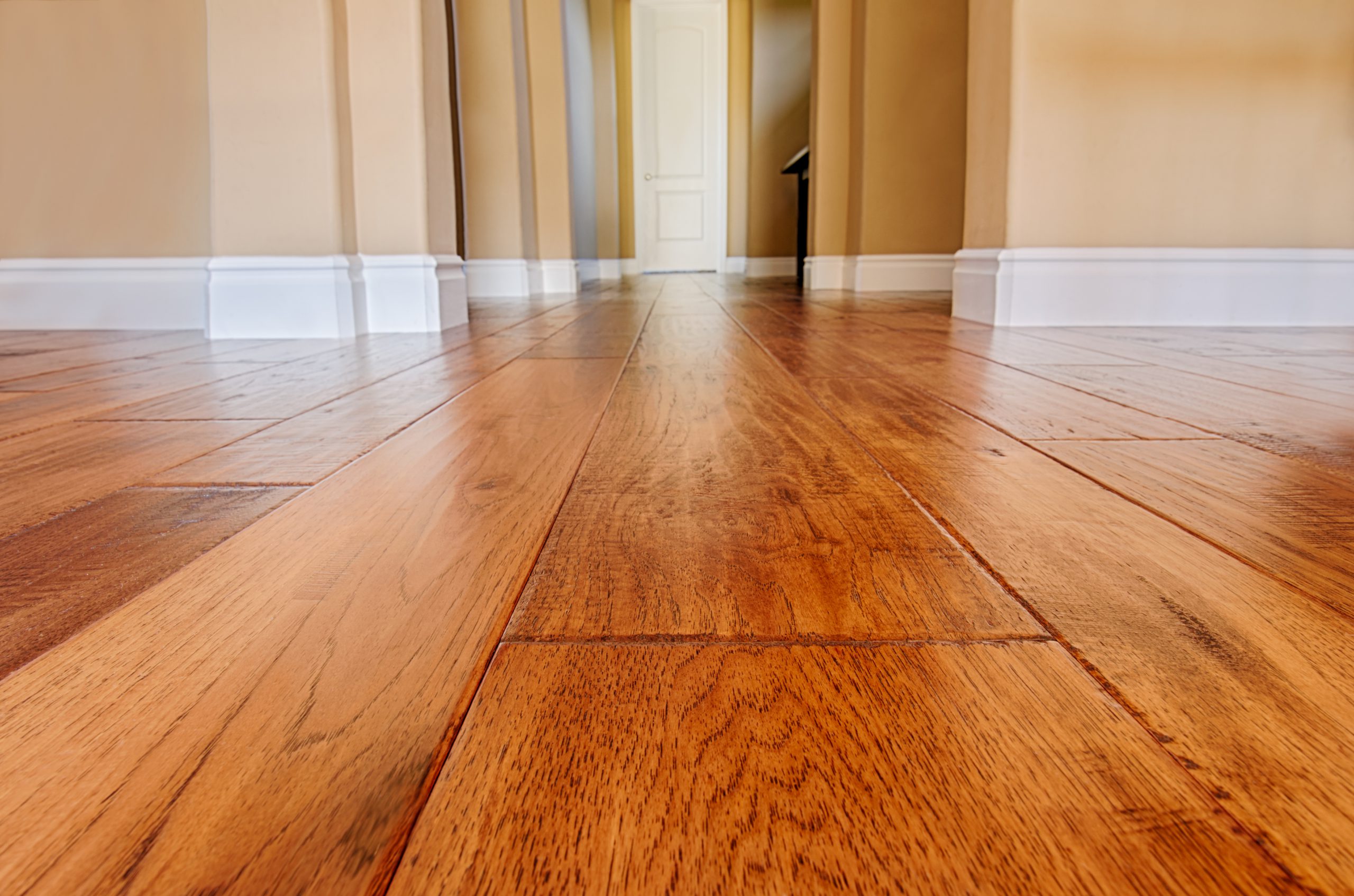
Flooring is an important element within your home, it will not be replaced often, so it needs to be functional and aesthetically pleasing. Factors to consider when choosing a new floor include: what material do you want to use? Will it be functional? Is it long lasting? Is it in your budget?
Many homeowners choose hardwood floors, for its many benefits: it is durable, strong and long lasting. It is available in different types and shades of wood and with the right maintenance, it will literally last a lifetime. Wood is a natural insulator, so your home will be more energy efficient, cooler in the summer and warmer in the colder months. Popular types of wood used for hardwood floors are: maple, oak and cherry, also: walnut, bamboo, hickory and ash.
There are 2 classifications of hardwood floors, solid hardwood floors and engineered hardwood floors. Each has their own advantages and disadvantages.
Solid Hardwood
Solid hardwood flooring consists of traditional solid floorboards; which are extremely durable and can be refinished as many times as you desire. It is incredibly long lasting, however, it cannot be installed over concrete and needs an underfloor. Hardwood floor refinishing is needed after hardwood floor installation, although prefinished hardwood is available for extra cost. Solid hardwood is more costly than other floor types.
Engineered Hardwood
Engineered hardwood flooring is less costly than solid hardwood, it is made from multiple layers of compressed wood, polymers and resin, topped off with a layer of real hardwood. Hardwood floor installation is simple and can occur over any type of surface, including: wood, linoleum, tiles and concrete. Engineered hardwood is pre-finished and treated to withstand high humidity levels so that it doesn’t warp or swell. However, it is not as durable or long-lasting in comparison to solid hardwood floors.
- By: admin
- Category: Uncategorized
- 0 comment

Leave a Reply